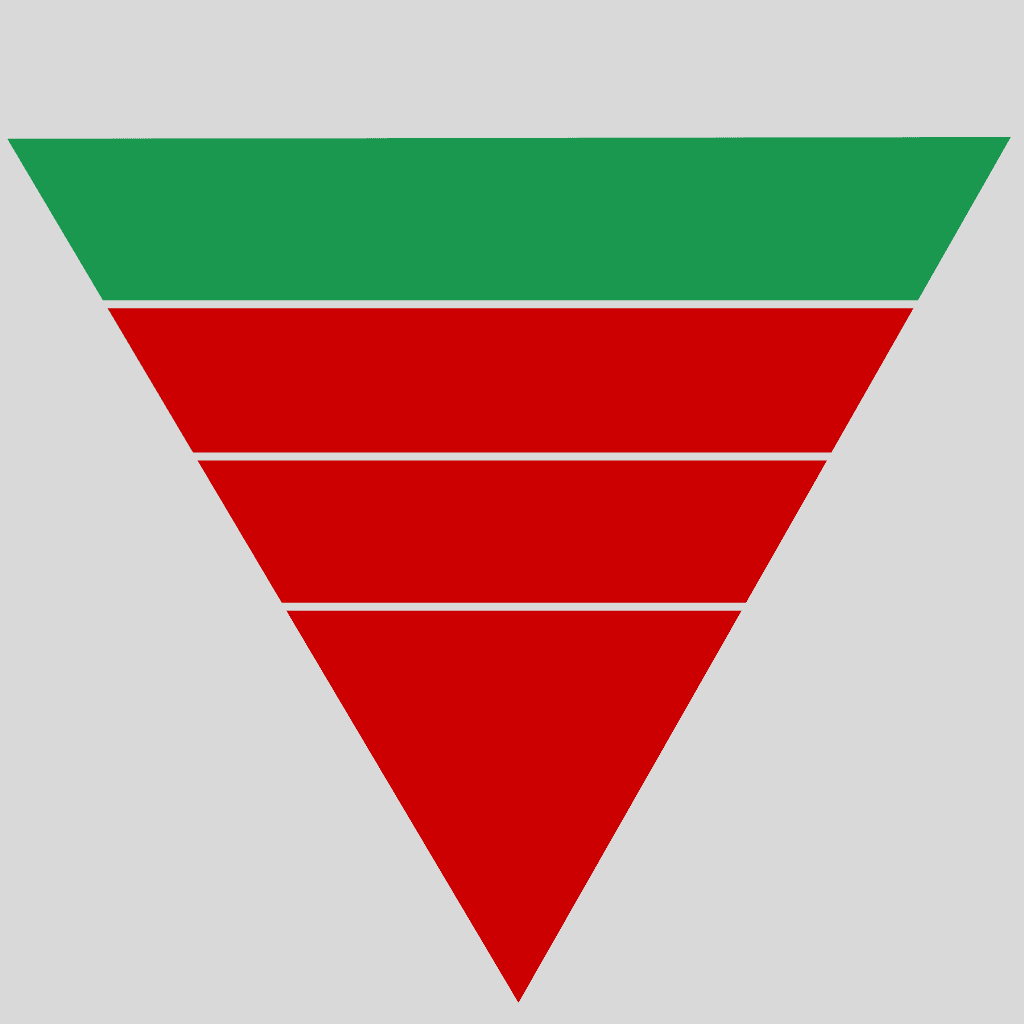
What it is
Research Casualty is the state where AI clearly knows about you early on. Ask about the category, and you're mentioned. Ask who the players are, and your name comes up. Then, somewhere between initial research and the actual decision, you disappear. By the time a model is comparing specific options or making a recommendation, you're gone, replaced by competitors who weren't even in the picture at the start.
This is one of the more painful states to diagnose from the outside, because everything looks fine at the top. Awareness exists. The problem is entirely happening in the handoff between "here's who's out there" and "here's who you should actually pick," and it means every bit of top-of-funnel effort is currently being wasted on people who then get steered elsewhere.
What this actually looks like
B2B: A commercial insurance brokerage is well known in its region and gets named readily when a model is asked "what insurance brokers serve manufacturing companies in [state]?" But ask "which broker should a mid-size manufacturer choose, and why?" and a different set of names shows up, ones with detailed comparison content, published case studies, and clear differentiation on specific coverage types. The brokerage has visibility but no comparison-stage content, so it gets dropped the moment the question moves from "who exists" to "who's actually right for this."
B2C: A boutique fitness studio comes up when someone asks "what gyms or studios are in [neighborhood]?" It's a known, visible local business. Ask "which studio should I choose if I'm a beginner looking for strength training?" and it drops out entirely, replaced by studios with detailed class descriptions, instructor bios, and beginner-specific content that actually answers the comparison question being asked.
Both businesses are doing the hard part, getting known, and then losing the moment that actually decides the outcome.
Why this happens so often
- Top-of-funnel and comparison content require genuinely different things. Being known is often a function of general reputation, local presence, or broad content. Being chosen requires specific, comparative, decision-oriented content that answers "why this one over that one," which most businesses never get around to writing.
- Comparison content feels uncomfortable to write. Naming competitors, being specific about differentiation, and making an honest case for why you fit a particular buyer is a different kind of writing than general marketing copy, and a lot of teams avoid it.
- Sales conversations do this work manually, so it never gets written down. If your sales team is great at explaining why you're the right fit once someone's on a call, that expertise never makes it into content a model can retrieve before the call happens.
- Competitors have simply built more decision-stage content. This is often not about being outmatched on quality. It's about being outmatched on the specific content type (comparisons, "best for X" content, detailed differentiation) that AI needs at the MOFU and BOFU stages.
- Marketing and sales content live in different silos. The comparison logic your best salesperson uses in a live deal often never gets translated into public content, which means AI has no way to learn it either.
How to fix it
The fix for Research Casualty is narrow and specific: build the comparison and decision-stage content that currently doesn't exist, using the same logic your best salespeople already use in live conversations.
On-site
- Write direct, honest comparison content: "us vs. [category]," "how to choose a [category] for [use case]," "what to look for when picking a [category]."
- Build "best for" content that segments by buyer type, use case, or need, and clearly states which segment you're the strongest fit for.
- Interview your best salespeople and turn their comparison logic (the reasons they win in live conversations) into public content.
- Add detailed, specific proof at the comparison stage: case studies tied to specific use cases, not just general testimonials.
- Make sure your differentiation is stated plainly somewhere a model can retrieve it, not just implied through tone or design.
Off-site
- Get your comparison positioning into third-party "best of" and buyer's guide content, not just your own site.
- Encourage detailed, specific reviews that speak to who you're a good fit for, not just star ratings.
- Pursue analyst or industry expert commentary that positions you within the comparison set, not just the awareness set.
- Participate in forums and communities where people ask genuine comparison questions ("should I go with X or Y"), since these threads are frequently cited.
- Build relationships with the sites currently winning your comparison-stage citations, since displacing them usually starts with getting alongside them.
Where Surfacemap comes in
Research Casualty is easy to miss because the top-of-funnel numbers look genuinely good, and it's natural to assume the rest follows. Surfacemap shows you exactly where that assumption breaks:
- The precise stage where you drop out. Surfacemap tracks mentions across TOFU, MOFU, BOFU, and EVFU separately, so instead of a vague sense that "something's not converting," you see the exact point in the funnel where you disappear.
- Who replaces you, and why. Surfacemap shows which competitors take your place at the comparison stage and surfaces the specific content and cited domains behind that shift.
- The actual comparison-stage fan-out queries. These are the "which one should I choose" and "best for X" sub-questions a model asks itself, giving you the real language to write your comparison content to.
- Which use cases or segments you're strongest and weakest in. If you hold up in some comparison scenarios and vanish in others, Surfacemap shows you where, so your new content targets the actual gap.
- Trendlines as you publish new comparison content. This is a state that should visibly improve once decision-stage content goes live, and Surfacemap tracks whether it actually does.
- Which LLMs are dropping you hardest. Some models weight comparison and "best for" content more heavily than others. Surfacemap shows you where the drop is worst so you know where new content will matter most.
Run a Surfacemap audit focused specifically on MOFU-to-BOFU movement. That's the exact seam Research Casualty falls apart at, and it's not something you'll catch by watching awareness metrics alone.
See your own brand's mention state
SurfaceMap.cc runs this exact diagnostic continuously — fan-out queries by funnel stage, cited domains over time, and the competitor URLs winning the citations you're losing.
See Where You Stand