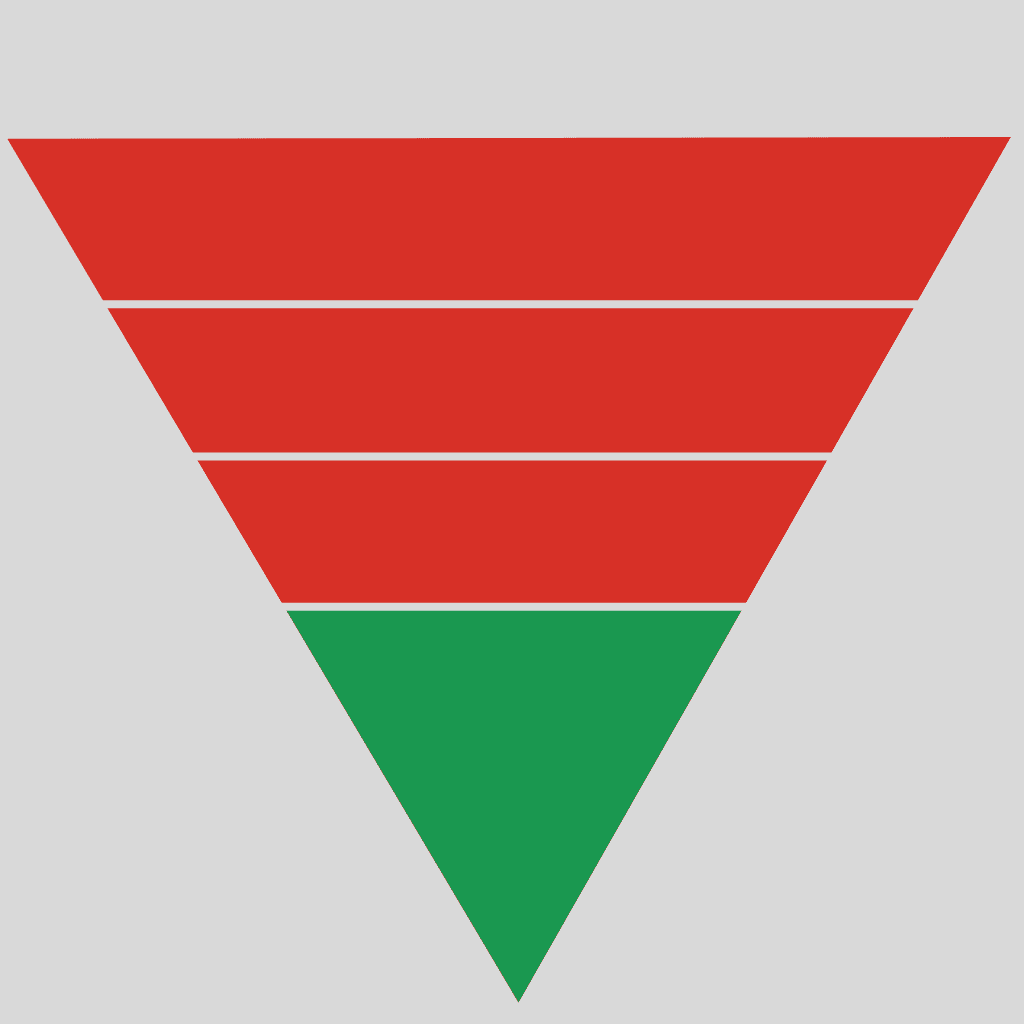
What it is
Customer Secret is the strange, almost backward version of Invisible Brand. Once someone becomes your customer, AI has plenty of good things to say. Ask about implementation, support, or whether people are happy with the choice, and you show up fine. But ask any of the earlier questions, who's out there, who should I consider, who's the right pick, and you disappear completely.
In other words, you've earned real loyalty and it shows up in the post-purchase conversation. It just never gets you discovered in the first place. The AI has learned your name from customer-side content (reviews, support docs, case studies, community mentions) but has nothing to go on when someone is still shopping.
This is common with businesses that pour their content energy into onboarding, documentation, and customer success and treat top-of-funnel marketing as a lower priority, usually because the sales pipeline has historically run on referral rather than new-buyer research.
What this actually looks like
B2B: A managed IT services provider has excellent client retention and a strong reputation among the businesses it already serves. Ask an AI model "what do customers say about working with [company]?" and it pulls positive detail from case studies and a few glowing G2-style reviews. Ask "what are the best managed IT providers for a 50-person company in [region]?" and the same company never appears. All its content lives behind onboarding portals and support docs. None of it answers the question a prospect is actually asking before they've heard of the company.
B2C: A specialty pet nutrition brand has a devoted customer base that swears by it, and that shows up clearly if you ask an AI what people think of the brand after buying. Ask "what's a good grain-free dog food brand for a dog with allergies?" and it's absent from the answer. The brand's content strategy is built around retention emails and loyalty programs, not the kind of comparison and education content a new buyer actually searches for.
Both companies have a real, provable strength. It's just locked behind the purchase, invisible to anyone still deciding.
Why this happens so often
- Content investment follows the customer lifecycle, not the buyer journey. Teams naturally spend resources on onboarding, support, and retention because that's where churn risk and revenue protection live. Top-of-funnel education content often gets deprioritized because it's harder to tie directly to a quarterly number.
- Loyalty is real but siloed. Reviews, testimonials, and case studies exist, but they're written for people who already bought, using language and detail that assumes prior context a new buyer doesn't have.
- Sales has historically run on referral. If most new business comes through word of mouth, there's been little pressure to build the kind of top-of-funnel content that a language model needs to learn the category and name the players in it.
- Support and community content isn't public, or isn't structured. A lot of the strongest customer-side proof lives in gated portals, private Slack communities, or unstructured support tickets, none of which an AI model can retrieve or cite.
- Growth has plateaued without an obvious cause. This state often gets misread internally as "we've saturated our market" or a churn problem, when the real issue is that new-buyer discovery has quietly gone to zero while the existing customer base props up the numbers.
How to fix it
The good news with Customer Secret is you're not starting from nothing. The proof already exists. The job is turning private, customer-side trust into public, top-of-funnel content that AI can actually retrieve before someone buys.
On-site
- Build category and comparison content aimed at people who've never heard of you, not just people evaluating you by name.
- Pull your strongest customer proof out from behind gated portals and support docs and rewrite it as public-facing case studies and testimonials that a first-time visitor can actually understand.
- Add FAQ content answering the questions a new buyer asks before they know your name, not just the ones your existing customers ask.
- Publish structured data (Organization, Product/Service, Review, FAQPage) so the proof you do have is machine-readable, not just readable.
- Create genuine educational content about the category itself. Right now the model has learned you're good at the end of the journey and knows nothing about you at the start.
Off-site
- Get your existing customer advocacy onto the review platforms and directories AI models actually cite (G2, Capterra, industry-specific review sites, Google Business Profile), not just internal testimonial pages.
- Seed your strongest customer stories into trade press, podcasts, and roundup content aimed at people who are still deciding, not just customer newsletters.
- Encourage detailed public reviews, not just private feedback surveys or NPS scores that never leave your CRM.
- Pursue "best of category" placements. If your loyalty is real, that's a legitimate claim to make in front of new buyers, not just existing ones.
- Build presence in forums and communities (Reddit, niche Slack or Discord groups) where category research actually happens, since these are frequently cited sources for early-stage AI answers.
Where Surfacemap comes in
Customer Secret is deceptively easy to miss internally, because everything looks healthy from the inside. Customers are happy, support tickets are fine, retention looks good. The gap only shows up when you look at what AI says to someone who hasn't bought yet, which most teams never check. Surfacemap gives you that view directly:
- The exact TOFU and MOFU gap, side by side with your strong EVFU signal. Surfacemap shows the contrast plainly: strong post-purchase mentions, near-zero early-stage mentions, so you can see the split instead of guessing at it.
- Which competitors are capturing the new-buyer conversations you're winning by reputation but losing by visibility. Surfacemap names them and shows exactly what they're doing differently at TOFU and MOFU.
- The cited domains actually carrying early-stage buyer research in your category. These are the directories, forums, and comparison sites you need to be on, identified specifically rather than guessed at.
- The real fan-out queries new buyers (and the models researching on their behalf) are generating. This tells your content team exactly what a first-time researcher is asking, which is usually not the same language your existing customers use.
- Segmentation by use case and market. If Customer Secret is worse in some regions or for some product lines than others, Surfacemap shows you where to prioritize the new content.
- Which LLMs already trust your post-purchase signal and might be quickest to pick up new top-of-funnel content. Some models weight recent, structured content more heavily than others, so this tells you where to expect the fastest movement.
Run a Surfacemap audit to see exactly where the wall is between "known and loved" and "known at all." That's the line Customer Secret lives on, and it's the one thing internal metrics won't show you.
See your own brand's mention state
SurfaceMap.cc runs this exact diagnostic continuously — fan-out queries by funnel stage, cited domains over time, and the competitor URLs winning the citations you're losing.
See Where You Stand