What it is
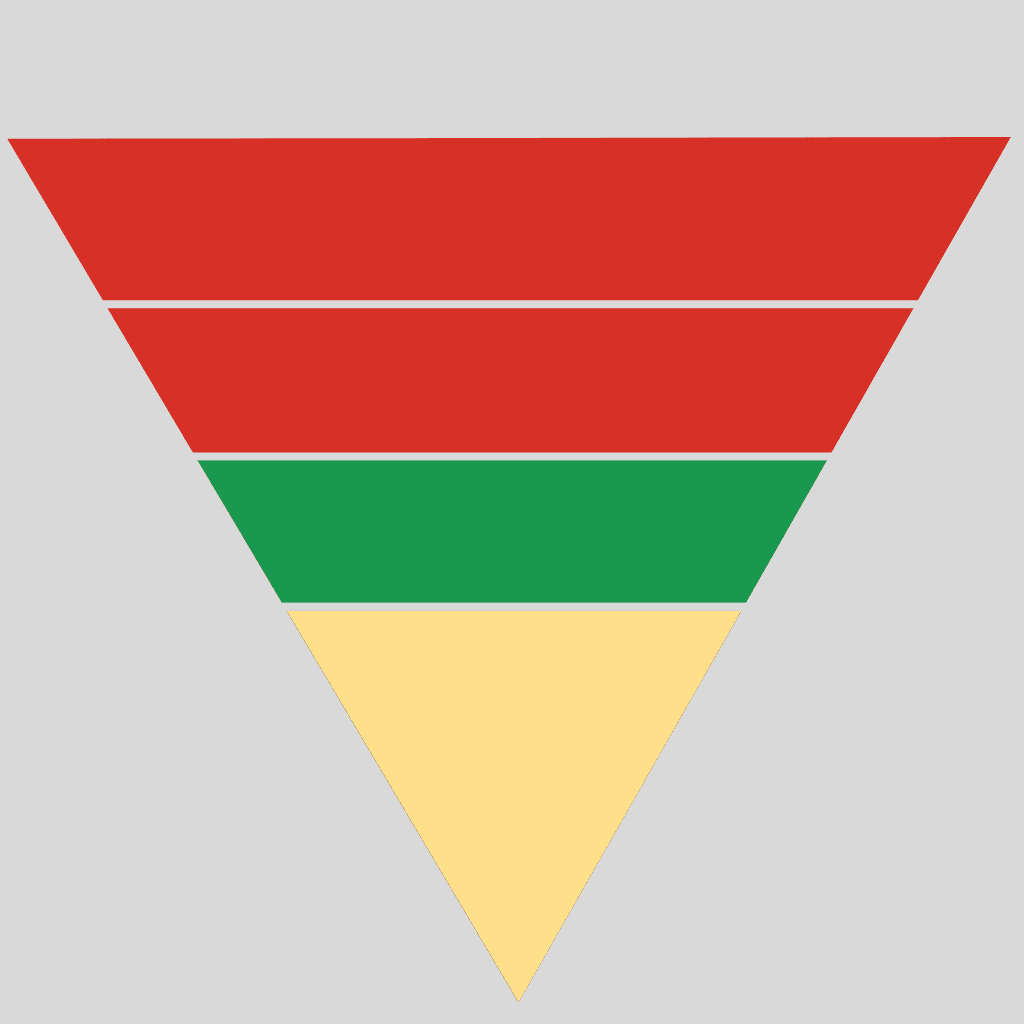
Branded Bubble is a state a lot of businesses mistake for good news. Ask AI about your brand by name, and you get a strong, accurate, favorable answer. The problem shows up the moment you take your name out of the question. Ask about the category, ask for a comparison, ask who to consider, and you're nowhere. You only exist inside your own branded bubble. Unbranded and competitive queries, the ones a genuinely new buyer actually asks, never surface you.
This is common with businesses that have invested heavily in their own site, their own case studies, and their own brand-name SEO, and have unknowingly built a wall around themselves. Everything reinforces the brand to people who already know it. Nothing reaches people who don't.
What this actually looks like
B2B: A project management software company has excellent branded content: detailed product pages, a strong help center, well-optimized case studies. Ask "tell me about [company]" and the answer is thorough and accurate. Ask "what's the best project management tool for a 20-person creative agency?" and the company never appears, while several competitors do, because those competitors have invested in unbranded comparison content while this company invested entirely in its own name.
B2C: A skincare brand with loyal customers has detailed product pages and an active presence when people search its name directly. Ask "what's a good skincare brand for sensitive skin?" and it's absent, replaced by brands that have built ingredient-focused, condition-specific, unbranded content addressing exactly that question.
Both brands are strong once someone already knows to look for them. Neither has built anything that reaches the person who doesn't.
Why this happens so often
- Brand-name content is the easiest content to justify and produce. It's natural to build detailed content about your own product first. Unbranded, comparison, and category content requires actively thinking from the perspective of someone who's never heard of you, which is a harder and less obvious exercise.
- SEO history often skews brand-heavy. If your organic strategy has historically focused on branded search terms (because they convert well and are easy to rank for), you've likely never built the unbranded content that AI needs to surface you to new buyers.
- Paid acquisition has substituted for unbranded organic and AI visibility. If new buyers have historically come through paid search or paid social, there's been no market pressure to build the unbranded content layer, and its absence goes unnoticed until AI-driven research becomes a real channel.
- Case studies and proof content are usually written for people who already know you. Confirmation-stage content (case studies, detailed product pages) does real work in the BOFU stage but does nothing to introduce you to someone earlier in the process.
- This state often gets misread as strong brand health. Because branded queries perform so well, this can look like a rare success story internally, while the actual new-buyer pipeline quietly depends entirely on other channels doing the discovery work AI isn't doing.
How to fix it
The fix is building outward: taking the same quality of content you've built about your own brand and applying it to the unbranded, comparison, and category questions a new buyer actually asks.
On-site
- Build unbranded category and comparison content: "best [category] for [use case]," "how to choose a [category]," written without assuming the reader already knows you.
- Create content addressing your category from the buyer's problem, not your product's feature set, since that's the framing new buyers actually search with.
- Add competitor-aware comparison content that honestly places you within the broader set of options, not just content that only ever talks about you.
- Make sure your FAQPage and Service schema exists on unbranded, problem-focused pages, not just your product and brand pages.
- Build content for the specific use cases and buyer types your category serves, since specificity is what unbranded content needs to actually get cited.
Off-site
- Pursue placement in comparison and "best of category" content on third-party sites, since this is exactly the content type currently missing from your own strategy.
- Get into unbranded review and directory content (G2, Capterra, industry-specific sites) where buyers research categories, not just your name.
- Build presence in forums and communities where people ask genuine, unbranded category questions.
- Work with trade press and industry analysts on category-level coverage that places you among the options, not just profiles of you alone.
- Track which competitors are winning your unbranded and comparison queries, and treat their content strategy as a direct map of the gap you need to close.
Where Surfacemap comes in
Branded Bubble is one of the easiest states to miss internally, because branded search and branded AI queries perform so well that everything looks fine. The gap only shows up when you deliberately strip the brand name out of the question, and most teams never do that on purpose. Surfacemap does it by design:
- A direct side-by-side of branded versus unbranded performance. Surfacemap runs both query types explicitly, so the contrast between "strong when named" and "invisible when not" is impossible to miss.
- Which competitors own the unbranded and comparison queries you're absent from. Surfacemap names them and shows exactly what unbranded content they've built that you haven't.
- The real unbranded fan-out queries new buyers generate. These are the actual words a first-time researcher uses, which is usually quite different from your own brand-centric content language.
- Which use cases or markets are worst affected. If some buyer segments know you and others don't, Surfacemap shows where the bubble is thickest.
- Movement over time as unbranded content goes live. This state should shift measurably once new content targets unbranded queries specifically, and Surfacemap tracks whether it does.
- Which LLMs are most reliant on branded signal for you specifically. Some models may already have thin unbranded recognition worth building on, and Surfacemap shows you where.
Run a Surfacemap audit with unbranded and unprompted competitive queries specifically, not just your own name. That's the only way to see Branded Bubble clearly, since by definition it hides behind your strongest metric.
See your own brand's mention state
SurfaceMap.cc runs this exact diagnostic continuously — fan-out queries by funnel stage, cited domains over time, and the competitor URLs winning the citations you're losing.
See Where You Stand